Study on the Extraction Process of Proanthocyanidins from Peanut Red Skins of Different Purity Levels
2025/07/23
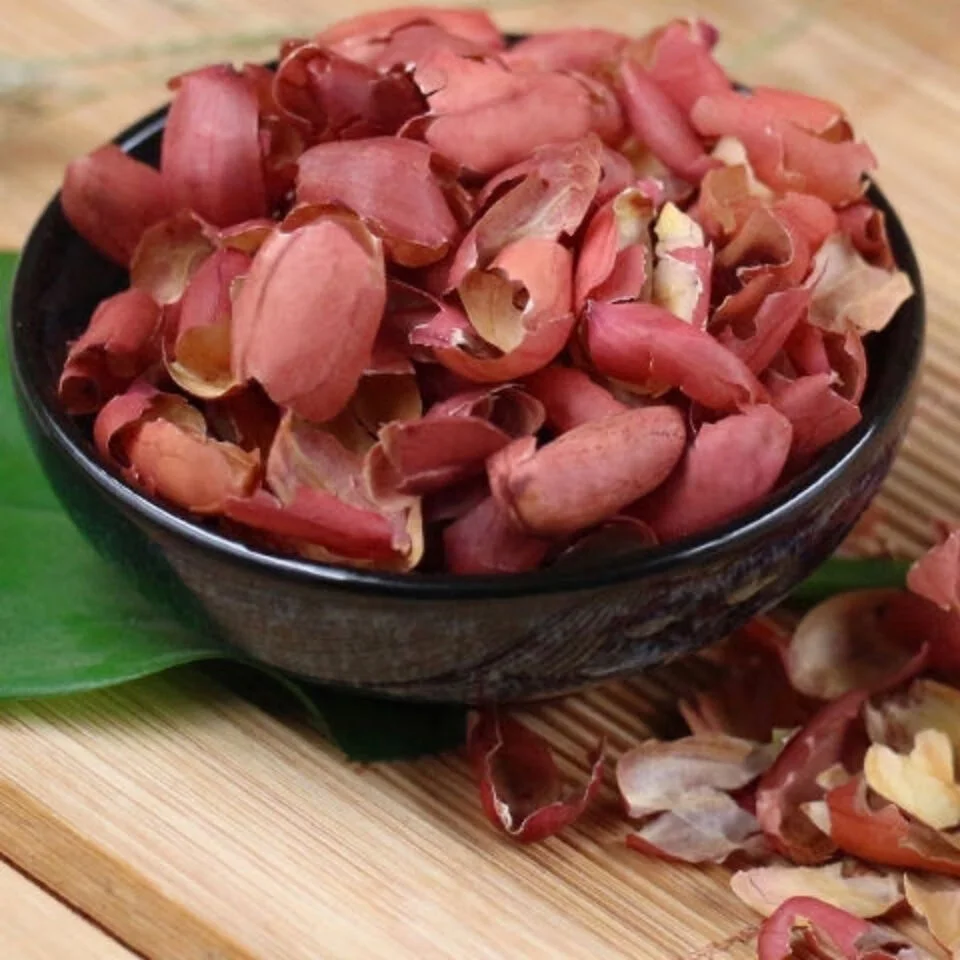
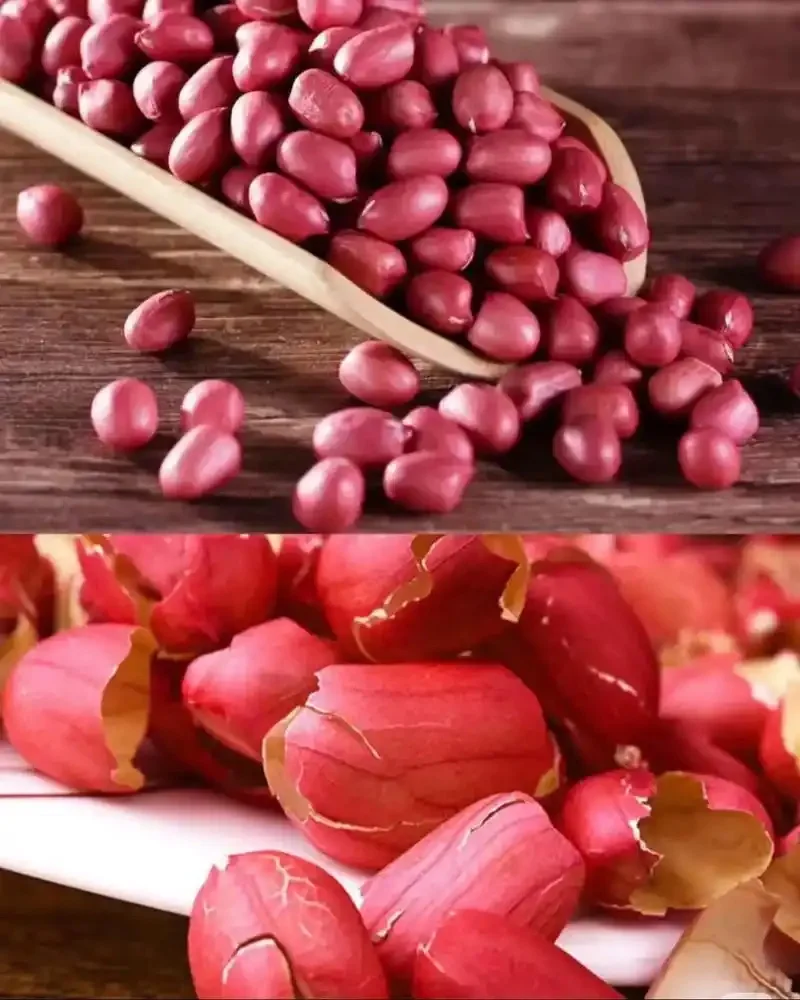
Peanut red skins, a byproduct of extremely low value in peanut production, are mostly discarded as waste after being used for animal feed, leading to significant resource wastage. Recent studies, however, have revealed that peanut red skins are rich in polyphenolic compounds, making them highly nutritious and valuable for various applications. These skins contain 90–125 mg of polyphenols per gram, including bioactive substances such as resveratrol, procyanidins, and phenolic acids. Notably, procyanidins account for 17% of the total weight of peanut red skins, with approximately 50% existing as low-polymer oligomers—known for their superior biological activity. Procyanidins boast potent antioxidant properties, positioning them as promising active ingredients in anti-cancer and cardiovascular disease-prevention therapies. Moreover, they can serve as safe, non-toxic, and eco-friendly natural antioxidants. Currently, most procyanidin products on the market are derived from grape seeds, which primarily contain Type B procyanidins characterized by higher polymerization degrees, averaging around 14.3 units. In contrast, peanut red skins are particularly abundant in Type A procyanidins, featuring lower polymerization levels with an average degree of just 3.2. Importantly, research has shown that only low-polymer procyanidins (with degrees ≤3) can be fully absorbed by the gastrointestinal tract. Additionally, Type A and Type B procyanidins appear to exert distinct physiological effects within the human body. Given these unique characteristics of peanut red skins compared to grape seed-derived procyanidins, there is considerable potential for developing innovative products based on procyanidins sourced from peanut red skins.
Original proanthocyanidins of varying purities find certain applications in fields such as food, health supplements, pharmaceuticals, and cosmetics, with the market exhibiting diverse demands for their purity levels. Currently, the main separation and purification methods include solvent extraction, chromatography, and preparative liquid chromatography; among these, the macroporous resin method is the most widely used due to its simple equipment, convenient operation, and suitability for industrial-scale production. In this study, we employed a macroporous adsorption resin to isolate and purify proanthocyanidins from peanut red skins, followed by HPLC-MS analysis and identification of the purified product.
Extraction of Proanthocyanidins from Peanut Red Skin
Grind the peanut skins into a fine powder using a small, high-speed grinder until they pass through a 40-mesh sieve. For every kilogram of peanut skins, extract the lipid components by soaking them in 10 liters of petroleum ether at 30°C for 5 hours in a constant-temperature water bath. After filtration, transfer the remaining residue to a fume hood to evaporate the petroleum ether completely, then store the material in a desiccator for future use.
Next, dissolve each kilogram of defatted peanut skin in 10 liters of 70% (by volume) ethanol solution. Perform ultrasonic extraction under the following conditions: ultrasonic power of 120 W, ultrasonic temperature at 35°C, and sonication for 10 minutes. Repeat this extraction process three times under identical conditions. Finally, combine all the filtered extracts, concentrate them by rotary evaporation until dry, yielding a crude extract rich in peanut skin proanthocyanidins.
Purification of Peanut Red Skin Proanthocyanidins Using Macroporous Adsorption Resin
Pre-treatment of Macroporous Adsorption Resin
Large-pore adsorption resins often contain monomers, dispersants, and porogens, among other components. Before use, these toxic organic residues must be removed through a pre-treatment process. Here’s the recommended pre-treatment method:
1. Soak in anhydrous ethanol for 24 hours.
2. Rinse thoroughly with anhydrous ethanol until the effluent no longer becomes cloudy when mixed with water at a 1:5 ratio.
3. Wash repeatedly with deionized water until no alcohol odor remains.
4. Immerse in a 5% hydrochloric acid solution for 2–4 hours.
5. Rinse again with deionized water until the effluent reaches a neutral pH.
6. Finally, soak in a 2% sodium hydroxide solution for 2–4 hours.
7. Complete the process by rinsing with deionized water until the effluent is neutral. The resin is now ready for use.
Static Adsorption and Desorption Tests of Macroporous Adsorbent Resin
After pre-treatment, the macroporous adsorption resin is filtered and its surface moisture thoroughly dried. Accurately weigh 1 g of each of the four pre-treated resins and place them separately into 25 mL stoppered Erlenmeyer flasks. Add 10 mL of crude peanut seed coat proanthocyanidin extract (with a mass concentration of 5.02 mg/mL) to each flask, shake well, and then transfer the mixtures into a thermostatic air-bath shaker set at 30°C with an oscillation rate of 120 rpm. At 0.5, 1, 2, 3, 4, 5, 6, 12, 18, and 24 hours, carefully withdraw the supernatant from each flask, measure the proanthocyanidin content in the supernatant, and plot the adsorption amount against time to generate the adsorption kinetic curves for each resin. After filtering out the saturated resins, add 20 mL of 95% ethanol to each, shake vigorously in the thermostatic air-bath shaker for 24 hours, filter the desorbed solution, and determine the proanthocyanidin content in the filtrate. Finally, calculate the adsorption rate, adsorption capacity, and desorption rate using the following formulas.
(1) Adsorption rate = (C₀ - C₁) / C₀ × 100%
(2) Adsorption amount = (C0 - C1) × V1 / m
(3) Desorption rate = C₂ × V₂ / (C₀ - C₁) × V₁ × 100%
In the formula:
C0 represents the mass concentration of crude proanthocyanidin extract from peanut red skins, in mg/mL;
C1 is the mass concentration of proanthocyanidins in the supernatant after resin adsorption, also in mg/mL;
C2 denotes the mass concentration of proanthocyanidins in the desorbed solution, again in mg/mL;
V1 refers to the volume of the supernatant collected after resin adsorption, in mL;
V2 is the volume of the proanthocyanidin desorption solution, in mL;
and m stands for the mass of the dry resin, in grams.
AB-8 Macroporous Resin Purifies Proanthocyanidins from Peanut Red Skin
Weigh the treated AB-8 macroporous adsorption resin and pack it into a chromatography column. Load the crude extract of peanut red skin proanthocyanidins at a specific mass concentration (clarification is preferred) onto the column, maintaining the column temperature at room temperature. During elution, first wash away larger-molecular-weight impurities such as proteins and polysaccharides using 4 BV of distilled water. Then, gradually elute the bound proanthocyanidins from the resin by applying 4 BV of ethanol solutions with varying volume fractions. Collect the eluate fractions sequentially, concentrate them to dryness via rotary evaporation, and finally obtain the purified proanthocyanidin product.
Next, calculate the purity and recovery yield of the final proanthocyanidin product using the following formula:
(4) Purity = (Mass of proanthocyanidins in the purified product / Total mass of the purified product) × 100%
(5) Recovery rate = (Eluent volume × Proanthocyanidin concentration in the eluent) / (Sample volume × Proanthocyanidin concentration in the sample) × 100%
Determination of proanthocyanidins
Drawing the Proanthocyanidin Standard Curve
Accurately weigh 0.0500 g of procyanidin standard, dissolve it in methanol, and dilute to a final volume of 25 mL to prepare a 2.0 mg/mL procyanidin standard solution (which should be freshly prepared as needed).
Next, precisely pipette 0, 0.5, 1.0, 1.5, 2.0, 3.0, and 4.0 mL of the procyanidin standard solution into separate 10-mL brown volumetric flasks, then dilute each to the 10-mL mark with methanol. This will yield working solutions with mass concentrations of 0, 0.10, 0.20, 0.30, 0.40, 0.60, and 0.80 mg/mL, respectively.
Finally, transfer 1 mL of each working solution into individual 10-mL test tubes. To each tube, add 6 mL of a 0.04 g/mL vanillin-methanol solution and 3 mL of concentrated hydrochloric acid, mix thoroughly, and incubate in a恒温 water bath at (30 ± 1)°C for 20 minutes. After removal from the water bath, measure the absorbance of each solution at 500 nm and use the data to construct a standard calibration curve. The resulting regression equation is Y = 1.3306X + 0.0664, with an R² value of 0.9966.
Determination of Proanthocyanidins in Peanut Red Skin
Take 1 mL of the peanut red skin crude proanthocyanidin extract, which has been diluted by a certain factor, and add it to 6 mL of 0.04 g/mL vanillin methanol solution and 3 mL of concentrated hydrochloric acid. Mix thoroughly, then place the mixture in a constant-temperature water bath at (30 ± 1)°C for 20 minutes. Afterward, remove the sample and measure its absorbance at a wavelength of 500 nm. The mass concentration of proanthocyanidins in the sample can be calculated using the regression equation derived from the standard curve.
1. 2.4 HPLC-MS Analysis of Peanut Skin Proanthocyanidins
Dissolve 10 mg of the eluted fraction separately in 10 mL of chromatography-grade methanol, filter through a 0.45-μm membrane, and then analyze by HPLC-MS.
Chromatographic conditions: The column used was a CSH column (2.1 mm × 100 mm, particle size 1.9 μm); mobile phase A consisted of acetonitrile, while mobile phase B was a 0.1% aqueous solution of formic acid; column temperature was set at 45°C; injection volume was 1 μL; and the mobile phase gradient program was as follows: 0–0.1 min, 5% A; 0.1–30 min, 5% to 20% A; 30–32 min, 20% to 80% A; 32–32.5 min, 80% to 5% A; and 32.5–35 min, 5% A.
Mass spectrometry conditions: ESI ionization source, negative ion mode; capillary voltage set at 3.0 kV, cone voltage at 40.0 V; ion source temperature maintained at 100°C, desolvation temperature at 400°C; cone gas flow rate at 50.0 L/h, desolvation gas flow rate at 700.0 L/h; collision voltage adjusted to 6 V; mass-to-charge ratio (m/z) scan range: 50–2000.
2. Results and Discussion
2. Static Adsorption and Desorption Rates of 14 Macroporous Adsorbent Resins for Peanut Red Skin Proanthocyanidins
Macroporous adsorption resin is a separation medium that combines adsorption properties with molecular sieving principles; its adsorption capacity depends on van der Waals forces and hydrogen bonding interactions between the resin and the adsorbate. The macroporous adsorption resins used in this experiment include a polar resin (NKA-9), a moderately polar resin (HPD750), a weakly polar resin (AB-8), and a non-polar resin (D101).
NKA-9 and AB-8 macroporous adsorption resins both exhibit high adsorption rates for procyanidins, while D101 resin shows a lower adsorption capacity compared to the other macroporous resins. Procyanidin molecules contain multiple phenolic hydroxyl groups, enabling them to form hydrogen bonds, which gives these compounds moderate hydrophilicity and polarity—making them readily adsorbed by polar, moderately polar, and weakly polar resins. Additionally, the adsorption performance of macroporous resins is also influenced by their pore structure and specific surface area. HPD750, despite having a large specific surface area, features small pore sizes that hinder the diffusion of procyanidin molecules into the resin’s internal surface, thereby reducing their adsorption efficiency. On the other hand, NKA-9 boasts a highly polar surface, leading to strong interactions with procyanidin molecules that may actually impede their desorption later on.
In terms of static adsorption kinetics, macroporous resins typically fall into one of two categories: Type 1, characterized by rapid equilibrium, where the adsorption amount increases sharply in the initial stages before quickly reaching adsorption balance; and Type 2, marked by slower adsorption dynamics, with minimal uptake during the early phase and a gradual increase in adsorption over time, resulting in longer equilibrium times. Among the resins tested, AB-8, NKA-9, and D101 all display Type 1 kinetics, meaning they achieve fast adsorption equilibrium. In contrast, HPD750 follows Type 2 kinetics, indicating a slower approach to equilibrium.
Considering the overall performance—specifically the resin’s adsorption capacity, desorption efficiency, and static adsorption kinetics—we conclude that AB-8 resin stands out as the optimal choice for separating and purifying procyanidins from peanut red skins. It offers high adsorption levels, easy desorption, and rapid attainment of adsorption equilibrium, making it an ideal material for this application.
The Effect of Sample Loading Rate on AB-8 Macroporous Adsorption Resin's Adsorption of Proanthocyanidins
When the sample loading flow rate is low, solutes in the sample have a longer contact time with the resin, leading to more complete adsorption. However, if the flow rate is too high, solute molecules don’t have enough time to diffuse into the resin’s inner surface for effective adsorption, resulting in insufficient uptake and wasted sample. Therefore, this study investigates how the sample loading flow rate affects the adsorption of proanthocyanidins by AB-8 macroporous adsorption resin.
When the sample loading rate was 0.25 mL/min and 0.5 mL/min, the macroporous resin exhibited high adsorption rates for procyanidins, with breakthrough times occurring at 250 minutes and 180 minutes, respectively. However, at higher loading rates of 0.75 mL/min and 1.0 mL/min, breakthrough occurred much earlier, indicating an incomplete adsorption process. Considering practical production conditions, a sample loading rate of 0.5 mL/min is deemed more suitable.
The Effect of Elution Flow Rate on the Elution Efficiency of Proanthocyanidins
To ensure sufficient contact time between the eluent and the solutes adsorbed onto the AB-8 macroporous adsorption resin, thereby enabling efficient desorption, it is essential to carry out the elution at an appropriate flow rate. Therefore, the effect of elution flow rate on the recovery of proanthocyanidins was investigated:
When the elution flow rate was 0.5 mL/min and 1.0 mL/min, the elution efficiency was nearly identical. However, once the flow rate increased to 2.0 mL/min or higher, the elution performance significantly deteriorated, and the purity of procyanidins also began to decline. Therefore, an elution flow rate of 1.0 mL/min was chosen, as it yielded a desorption rate of 89.31% for procyanidins with a purity of 98.7%.
The Elution Effect of Different Volume Fractions of Ethanol on Proanthocyanidins
When using macroporous adsorption resins for separation and purification, ethanol solutions are commonly employed as eluents. Since ethanol solutions of different volume fractions exhibit varying polarities, their ability to elute proanthocyanidins also differs accordingly. Therefore, this study investigated the effects of ethanol solutions with different volume fractions on the elution efficiency of proanthocyanidins.
The ethanol volume fraction significantly influences the elution profile of peanut skin proanthocyanidins, with the 40% ethanol solution yielding the highest peak in the elution curve and resulting in a relatively high concentration of proanthocyanidins collected within the range of 0.8 to 2.5 BV. In contrast, the 20% ethanol solution provided better elution efficiency, producing a distinct peak in the elution curve with only slight tailing. On the other hand, both 10% and 95% ethanol solutions showed poor elution performance, as their respective elution curves lacked any noticeable peak. Therefore, by collecting the eluate from different fractions, it is possible to prepare proanthocyanidins of varying purities.
The Influence of Elution or Collection Methods on the Desorption Efficiency of Proanthocyanidins
Procyanidins are a mixture composed of catechins or epicatechins with varying degrees of polymerization, containing abundant phenolic hydroxyl groups. During resin adsorption, hydrogen bonding is highly likely to occur, leading to differences in both the adsorption and desorption processes—and thus, in their respective rates—among procyanidins of different polymerization degrees. Consequently, gradient elution is very likely to yield procyanidins with varying degrees of polymerization or differing purities. Below is a list of the desorption effects obtained from collecting four distinct procyanidin fractions using ethanol elutions at different volume fractions:
The highest purity of procyanidins was achieved when elution was performed using a 20% ethanol solution, while a 40% ethanol solution resulted in the lowest recovery rate of procyanidins. Therefore, 20% and 40% ethanol were selected as the eluting agents for preparing procyanidins.
Also, collect the eluates from 20% and 40% ethanol separately:
The dry weight obtained from 20% ethanol elution decreased progressively, while the purity initially dropped, reached a minimum, and then increased again. The highest proanthocyanidin purity—23.4% of the total dry weight—was achieved in the eluate collected between approximately 2 to 3.5 BV. In contrast, the dry weight from 40% ethanol elution decreased steadily, with purity first rising sharply before declining again. The highest proanthocyanidin purity—84.2% of the total dry weight—was observed in the eluate collected within the range of about 0 to 2 BV.
In industrial production, different elution or collection methods can be selected based on product requirements. When using 20% ethanol for elution, collecting 2–3.5 BV of the eluent yields procyanidins with a purity greater than 98%, while collecting 0–4 BV of the eluent results in procyanidins with a purity exceeding 95%. On the other hand, when eluting with 40% ethanol, collecting 0–2 BV of the eluent produces procyanidins with a purity ranging from 85% to 90%, and collecting 0–4 BV of the eluent yields procyanidins at approximately 80% purity.
6HPLC-MS Analysis Results of Purified Peanut Red Skin Proanthocyanidins
The purified compounds obtained through separation using AB-8 macroporous adsorption resin were all oligomeric proanthocyanidins. Specifically, the 20% ethanol purification yielded primarily Type A proanthocyanidin dimers and Type A proanthocyanidin trimers, while the 40% ethanol fraction mainly consisted of Type A proanthocyanidin dimers and Type A proanthocyanidin tetramers. Interestingly, only the low-molecular-weight oligomers (degree of polymerization ≤3) demonstrated complete absorption by the gastrointestinal tract. Consequently, the peanut skin proanthocyanidins prepared in this study, due to their small molecular size and high bioavailability, are easily absorbed by the human body and can effectively exert their physiological functions within the body.
3. Conclusion
The study investigated a preparation process for isolating and purifying peanut red skin procyanidins of varying purities using AB-8 macroporous adsorption resin. The optimal separation and purification conditions were as follows: sample loading rate of 0.5 mL/min, elution rate of 1.0 mL/min, and elution solutions consisting of 20% and 40% ethanol. After desorption, two purified fractions were obtained: the 20% ethanol fraction, which achieved the highest purity level at 98.7% but had a relatively low recovery rate of 29.41%, and the 40% ethanol fraction, with a purity of 86.2% and a significantly higher recovery rate of 50.31%. By adjusting the collection method, procyanidins of different purities can be selectively obtained. Therefore, in industrial production, manufacturers can choose either the appropriate elution or collection approach based on the specific requirements of their final product.
HPLC-MS analysis revealed that the purified compounds isolated using AB-8 macroporous resin were all oligomeric proanthocyanidins. Specifically, the 20% ethanol fraction primarily consisted of A-type proanthocyanidin dimers and A-type proanthocyanidin trimers, while the 40% ethanol fraction was dominated by A-type proanthocyanidin dimers and A-type proanthocyanidin tetramers.