Complete Set of Pretreatment Equipment

Product Overview
Preprocessing steps typically include: cleaning, destoning, magnetic separation, metering, shelling, color sorting, crushing, softening, rolling, granulation or puffing, steaming and frying (conditioning), or drying—depending on the characteristics of the raw materials, the type of oil press used, and the specific equipment configuration.
Oil extraction processes typically include: hot pressing, temperate pressing, cold-pressing (commonly known as "cold extraction"), and double cold pressing. Depending on the characteristics of the raw materials and the desired quality of the oil and cake, the choice of equipment will vary accordingly.
The crude oil filtration process typically includes: sedimentation, leaf filtration, plate-and-frame filtration, centrifugal filtration, and bag filtration. Depending on the type of oil and the desired level of impurities, the appropriate equipment is selected accordingly.
The biscuit processing techniques typically include: crushing, cooling, expansion, and conditioning—though the specific equipment setup varies depending on the desired characteristics of the biscuits.
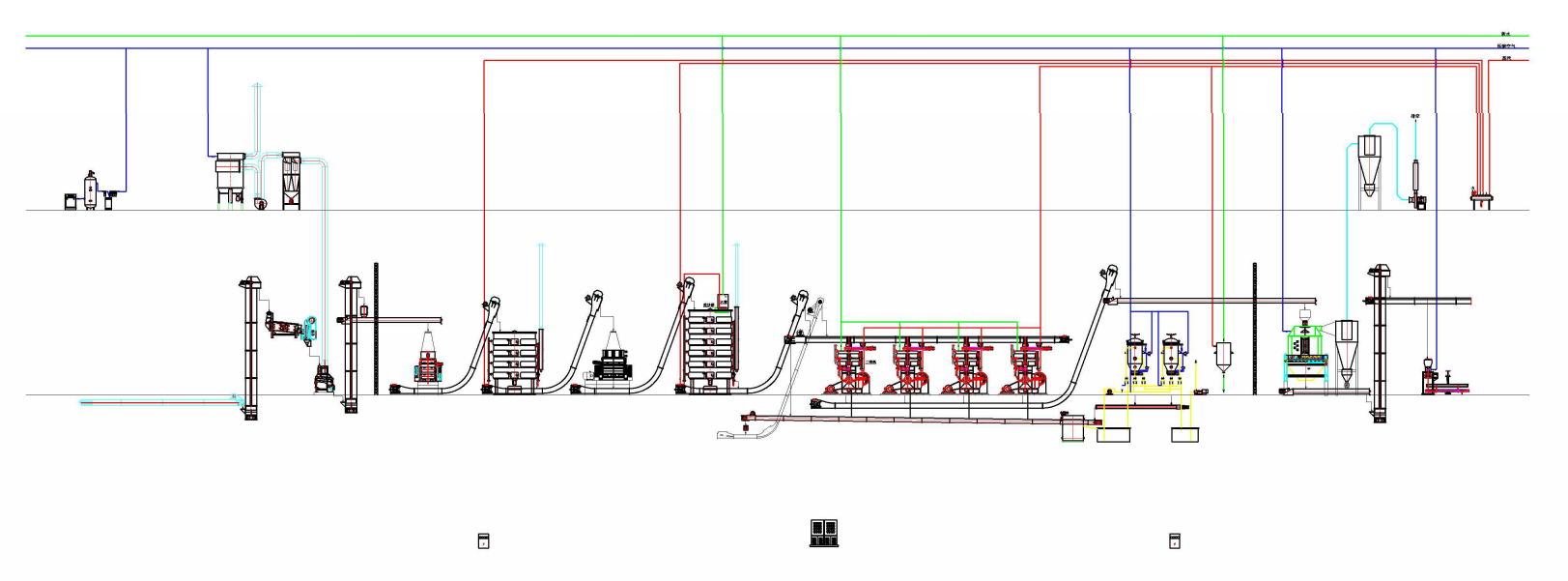
Oil Extraction Production Line Process Flow

Oil Extraction Production Line Process Description
The raw material delivered to the silo is sequentially fed into a cleaning screen via conveying equipment, where large impurities, small debris, dust, and lightweight contaminants are removed. Next, a specific gravity destoner eliminates paired stones, while a magnetic separator extracts ferrous impurities. Once cleaned, the material is sent to a crusher, where it undergoes a continuous two-stage process of compression and shearing—achieved by two pairs of counter-rotating toothed rollers—that breaks it down into small particles meeting the required specifications. These particles are then transferred to a softening pot, where the moisture content and temperature of the oilseed are carefully adjusted. This ensures that water and heat penetrate more effectively into the seed’s cellular structure, enhancing plasticity and preventing excessive powder formation during the rolling process. Finally, the material is fed into a rolling machine, where it evenly enters between two counter-rotating rollers equipped with precise pressure and gap settings, transforming the granular material into thin, sheet-like blanks tailored to meet the demands of the oil-extraction process.
The blank sheets are fed into the steaming and roasting pot, where they are heated to fully denature the proteins and disrupt the cellular structure. This process releases the oil trapped within the seed cells, causing it to migrate and accumulate on both the inner and outer surfaces of the sheets—resulting in visibly free oil. The temperature and moisture levels of the sheets are carefully adjusted to meet the specific requirements of the mechanical pressing process for oil extraction. By gradually increasing the temperature, the resistance to oil release is reduced, ensuring the sheets reach the optimal conditions for feeding into the oil press, where they are then subjected to pressing to extract the oil.
The oil-rich material from the oil press is fed into a settling tank via an oil-residue separation scraper, where it undergoes sedimentation and residue removal. The resulting mixed oil is then pumped into a filter for purification, with any cloudy oil returned to the filter process. Meanwhile, the clear oil flows into an oil storage tank, where it’s metered by an oil pump before being sent either to the refining workshop or directly to the oil depot. Meanwhile, the residue collected from the settling tank, along with the filter cake discharged from the filtration system, is combined and conveyed back to the oil press through an oil-residue separation scraper and a return residue screw conveyor—where it’s mixed again with fresh meal before being pressed once more. Finally, the spent cake is transferred to the cake storage facility.
Oil Extraction Production Line Process Flowchart