
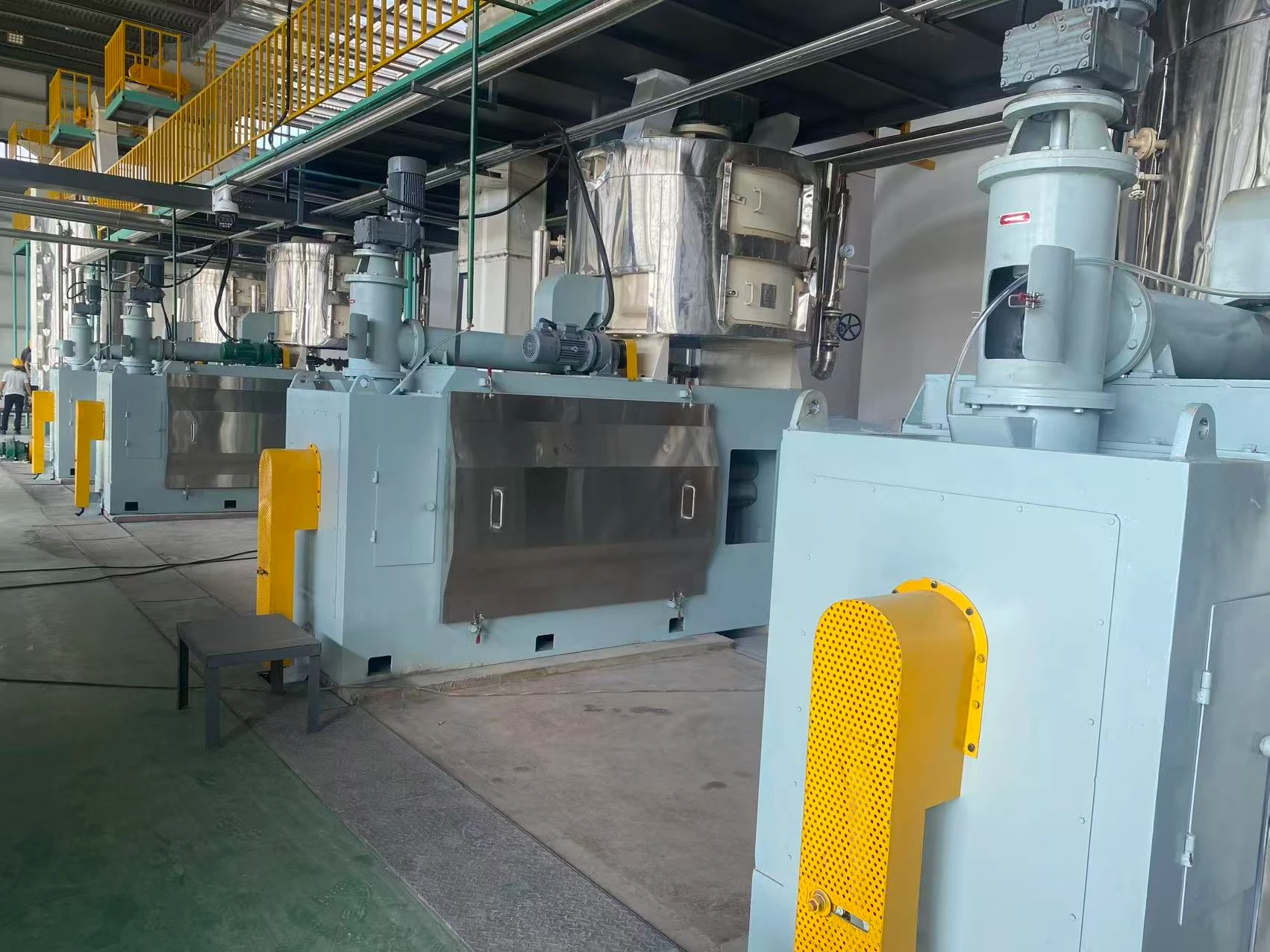
Flaxseeds pass through a permanent magnetic cylinder to remove iron impurities, then enter a cleaning screen to remove straw, large impurities and dust. They are then sent to a stone remover to remove stones. After that, they are processed into flaxseeds by a flaxseed rolling machine. The flaxseeds are sent to a steaming and frying pan to adjust the moisture content to an appropriate level and enter the first press for pressing. The first press cakes are crushed and then enter the second press for pressing. The second press cakes are sent to the cake storage by conveying equipment. The oil and residue are separated by the oil and residue separation scraper and enter the clear oil tank for sedimentation. The residue is scooped out and sent to the oil press for re-pressing. The oil overflows into the crude oil tank and is sent to the filter by the oil pump for filtration. The filtered crude oil is then pumped into the oil refining workshop for refining.
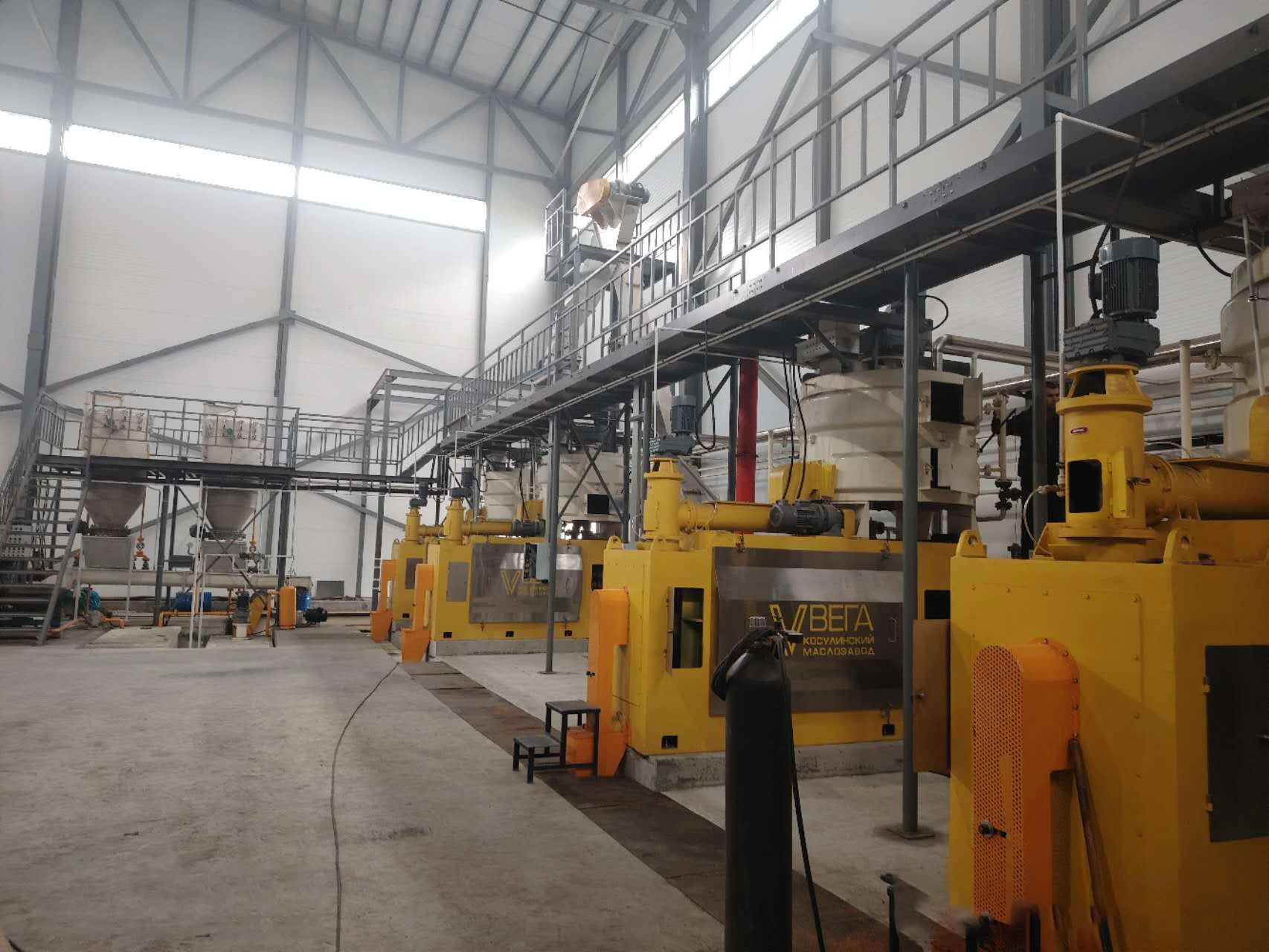
After passing through a permanent magnet cylinder to remove iron impurities, the rapeseed enters a cleaning screen, where it is freed from straw, large debris, and dust. Next, stone removal equipment eliminates any remaining stones, after which the material is directly pressed in a single-press machine. The resulting first-press cake is then crushed before being fed into a second press for further extraction. Finally, the second-press cake is conveyed via specialized equipment directly into the cake storage bin. Meanwhile, the oil and residue are separated using an oil-residue scraper system, with the oil flowing into a clarifying tank for sedimentation. Once the sediment settles, the clarified oil is skimmed off and transferred to a crude oil tank. From there, it’s pumped into a filtration unit for purification, and the filtered crude oil is subsequently sent to the refining workshop for final processing and refinement.
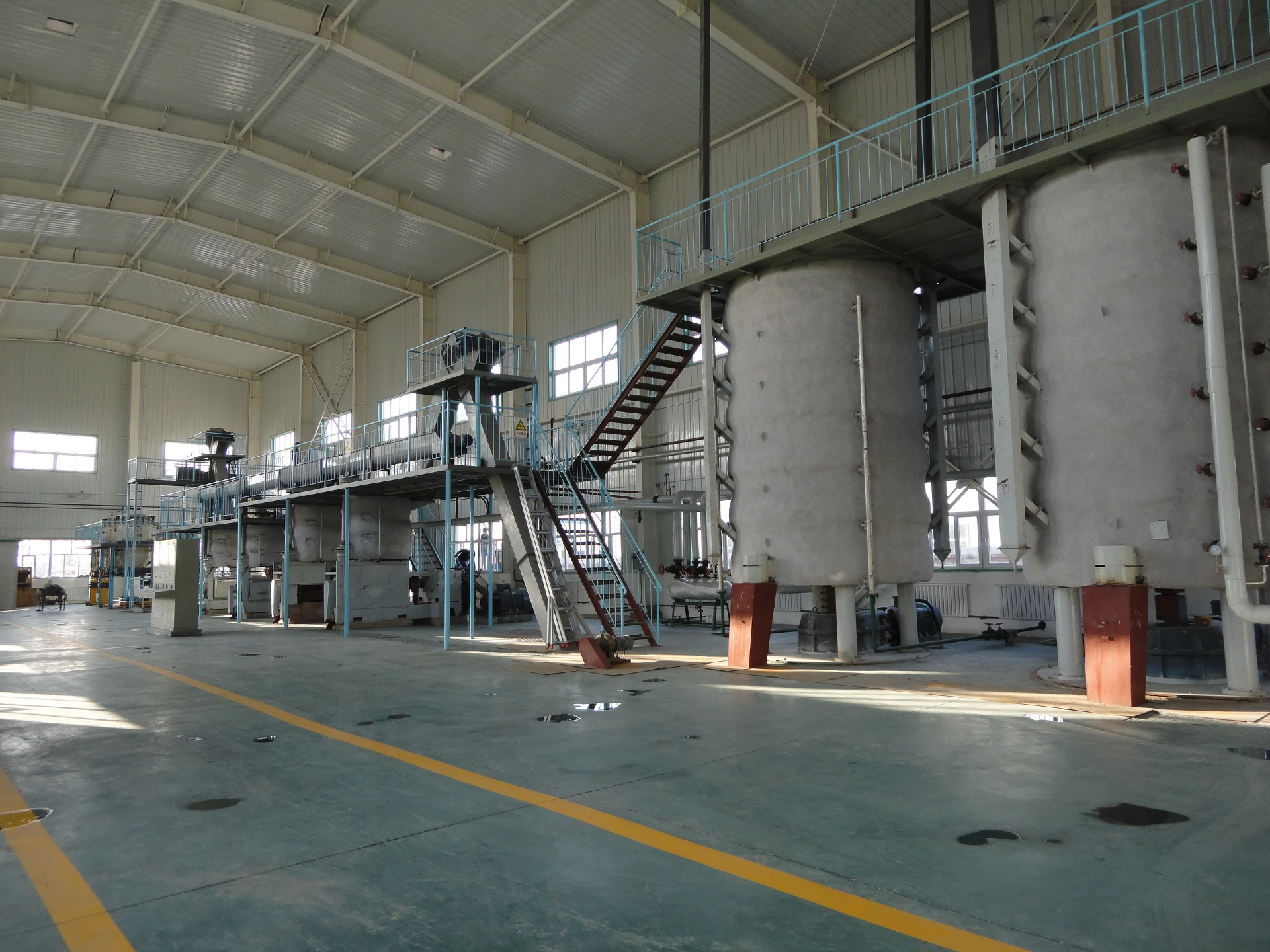
Sunflower (Sunflower Seed) Processing Plan
Sunflower seeds kernels pass through a permanent magnet cylinder to remove iron impurities, then move to a cleaning screen that eliminates straw, large debris, and dust. Next, they go through a destoner machine to separate out any stones, before being directly pressed in a single-press machine. The resulting first-press cake is crushed and fed into a second press for further extraction. Finally, the second-press cake is conveyed via equipment directly to the cake storage bin. Meanwhile, the oil and residue are separated using an oil-residue scraper system, with the oil flowing into a clarifying tank for sedimentation. After the sediment is removed, the remaining residue is returned to the oil press for another round of pressing. Meanwhile, the clarified oil overflows into a crude oil tank, where it’s pumped into a filter for purification. Once filtered, the crude oil is transferred by pump to the refining workshop for final processing and refinement.
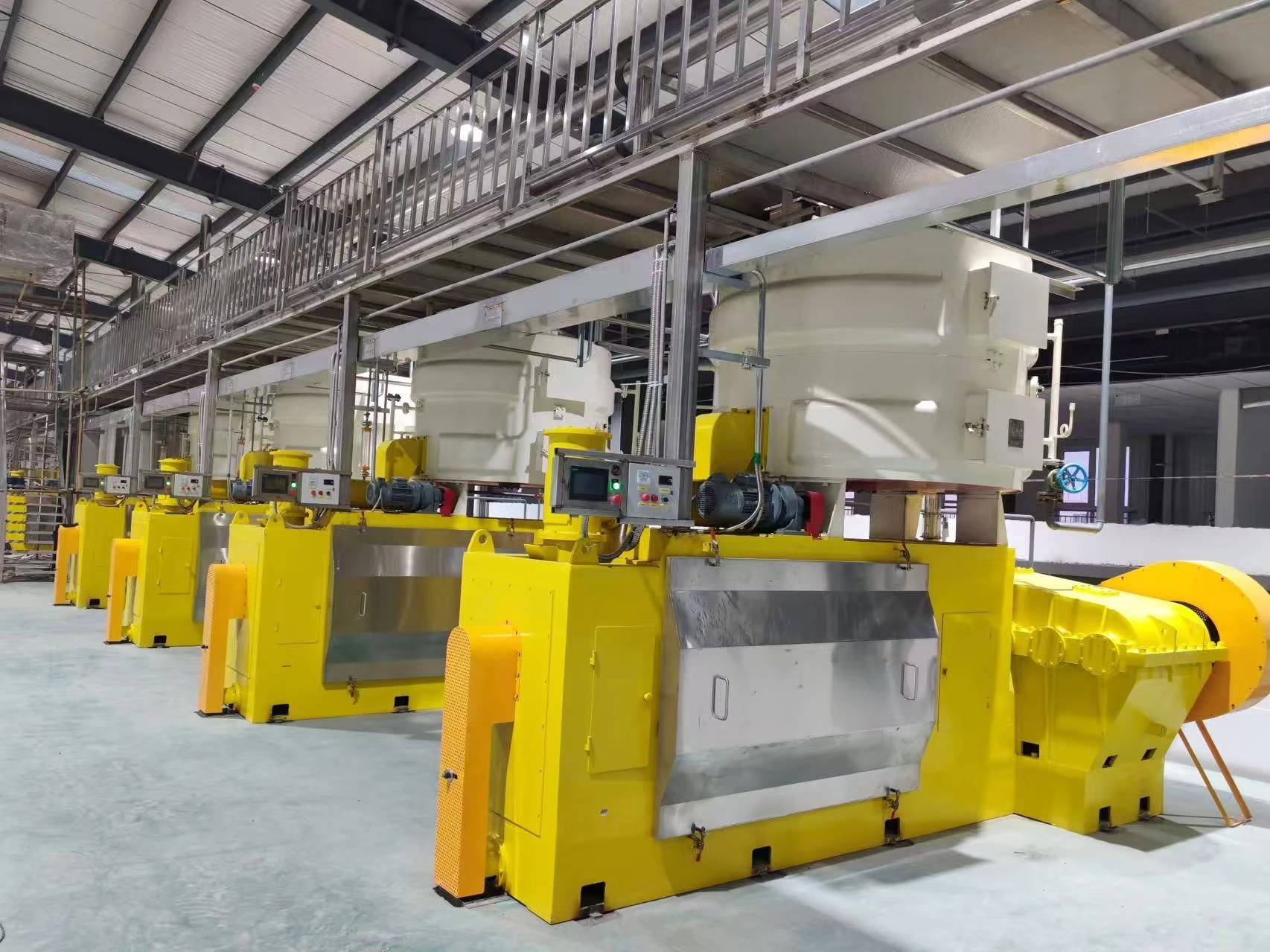
Cotton seed kernels are fed directly into the oil press after being processed through a permanent magnetic cylinder to remove iron impurities. The resulting oil cake is then conveyed via conveyor equipment to the solvent extraction workshop. Meanwhile, the oil and residue are separated using an oil-residue scraper, with the oil flowing into a clarifying tank for sedimentation. After the residue is removed, it’s returned to the oil press for another round of pressing. Meanwhile, the clarified oil overflows into a crude oil tank, where it’s pumped into a filter for further purification. Finally, the filtered crude oil is transferred by pump to the refining workshop for advanced processing and refinement.

Dried coconut (crushed) is fed into a permanent-magnet separator to remove iron impurities, then directly enters the oil press for extraction. The resulting oil cake is conveyed by equipment to a storage bin. Meanwhile, the oil and residue are separated using an oil-residue scraper, with the oil flowing into a clarifying tank for sedimentation. After the residue is skimmed off, it’s returned to the oil press for re-extraction. The clarified oil overflows into a crude oil tank, where it’s pumped through a filter for further purification. Finally, the filtered crude oil is transferred via pump to the refining workshop for advanced processing.
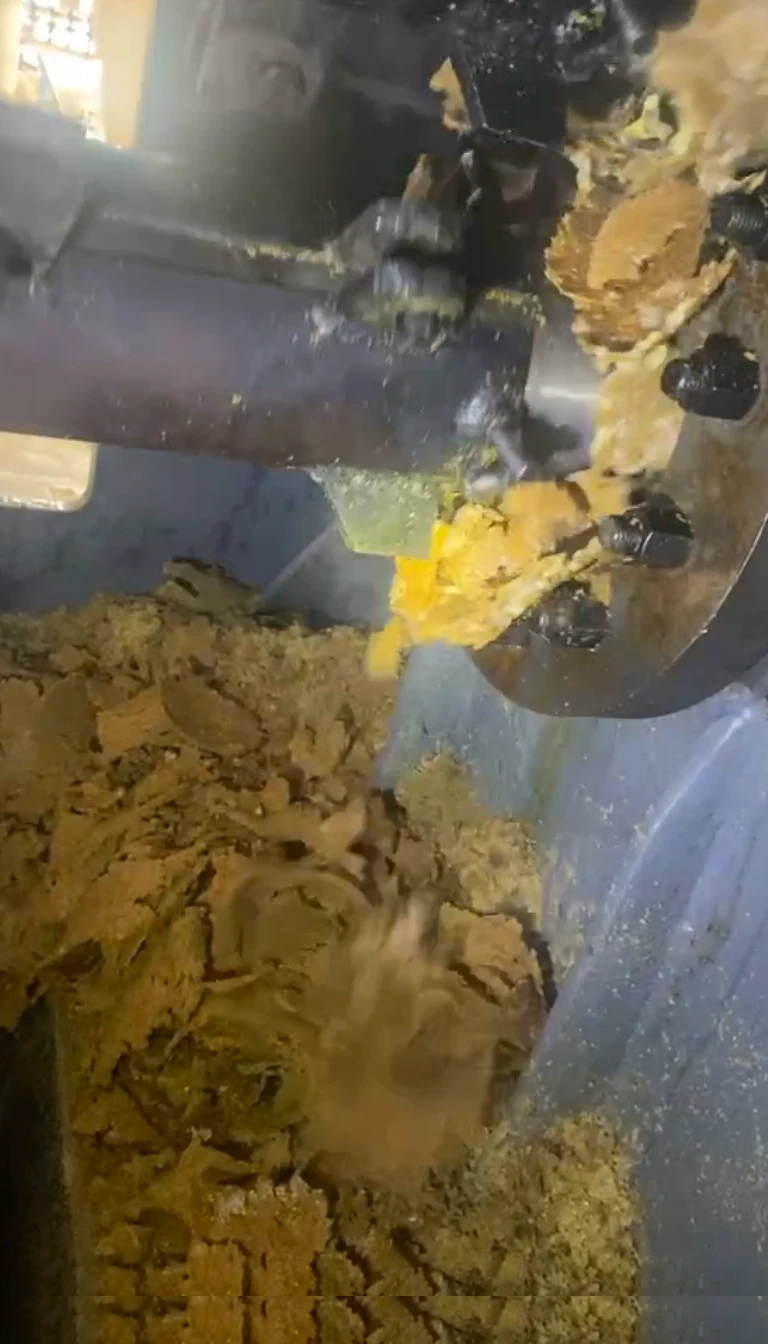
Corn germ is fed into a permanent-magnet drum to remove iron impurities, then passes through a primary cleaning screen that eliminates straw, large debris, and dust. Next, it enters a crusher for size reduction. The resulting granular material is transferred to a conditioning pot, where its moisture content is adjusted to the optimal level before being sent to the first and second oil-extraction presses. The cake from the second press is conveyed via equipment directly to the cake storage bin. Meanwhile, the oil and residue are separated using an oil-residue scraper system, with the oil flowing into a clarifying tank for sedimentation. After the sediment is removed, the residue is returned to the oil press for additional extraction. Meanwhile, the clarified oil overflows into a crude oil tank, where it’s pumped to a filter for further purification. Finally, the filtered crude oil is transferred by pump to the refining workshop for final processing and refinement.
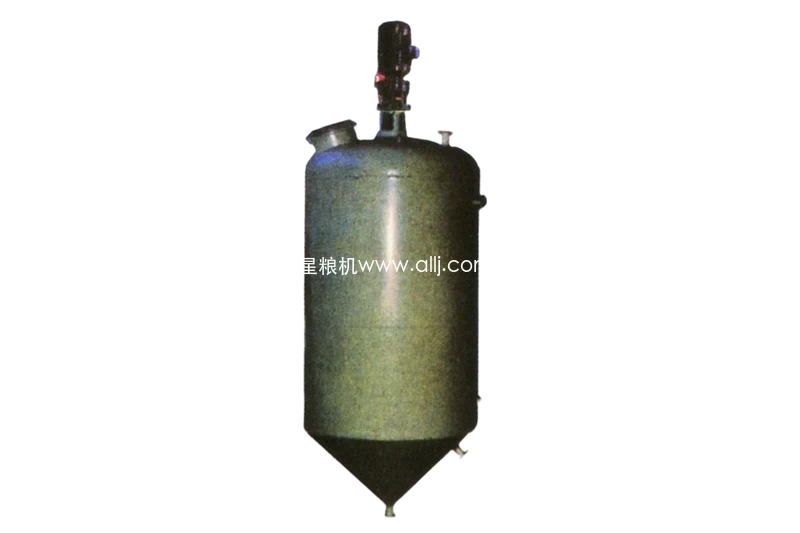
The YLY series decolorization pot is a batch-type decolorizing unit designed for processes such as oil decolorization, drying, and cooling.
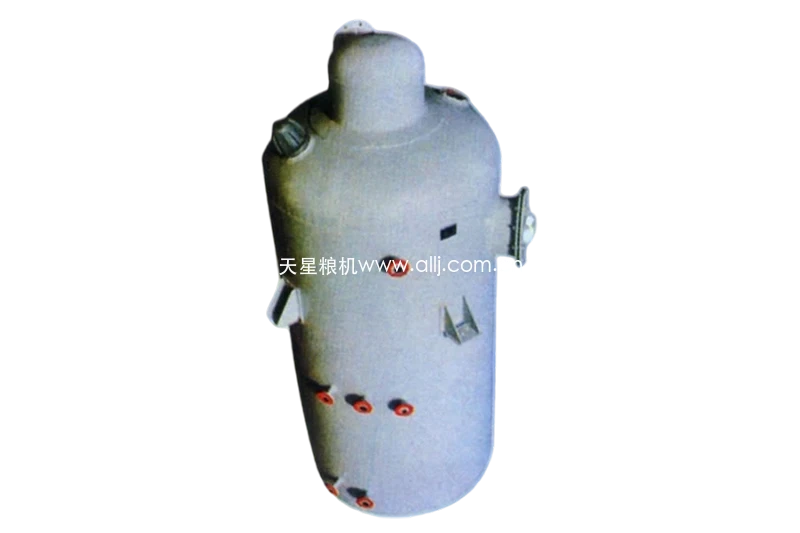
The LYX series stainless steel deodorizing pot is primarily used for batch deodorization of refined cooking oils and salad oils.
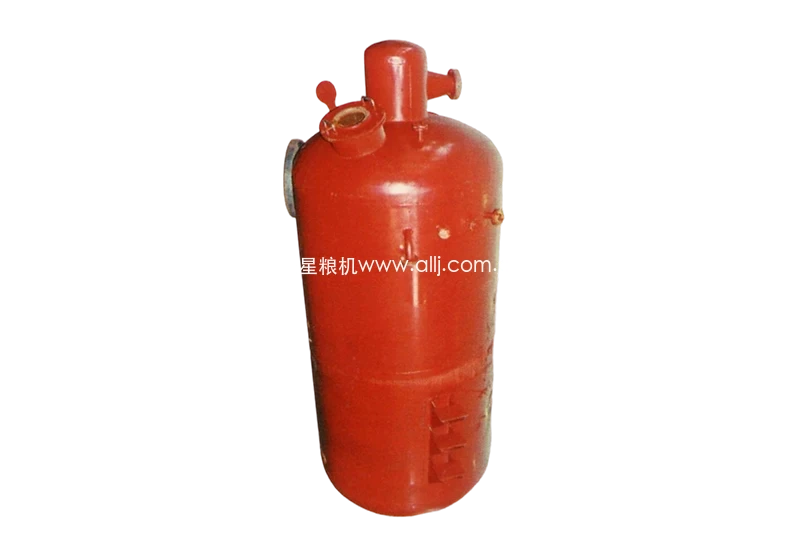
The LYL series refinery pots are primarily used for hydration, alkali refining, and dehydration processes in oil refining.
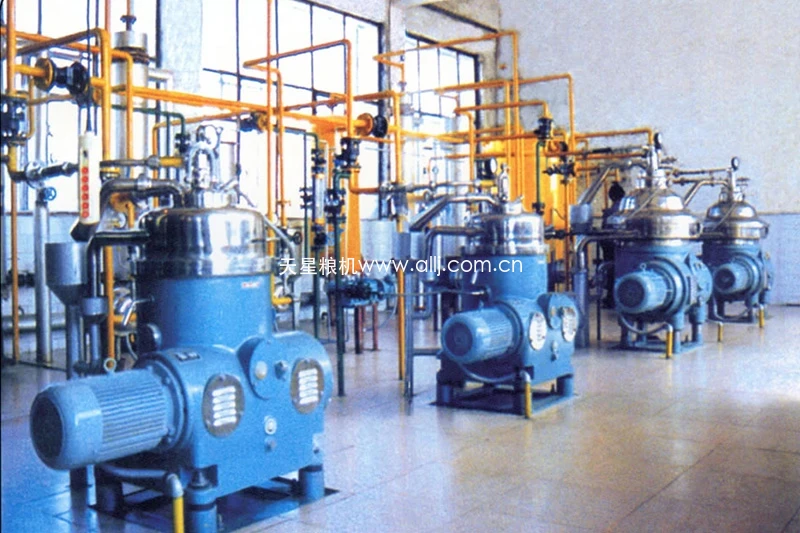
Refined crude oil can be processed through steps such as degumming, deacidification, decolorization, dewaxing, and deodorization to produce oils of grades 1 to 4.
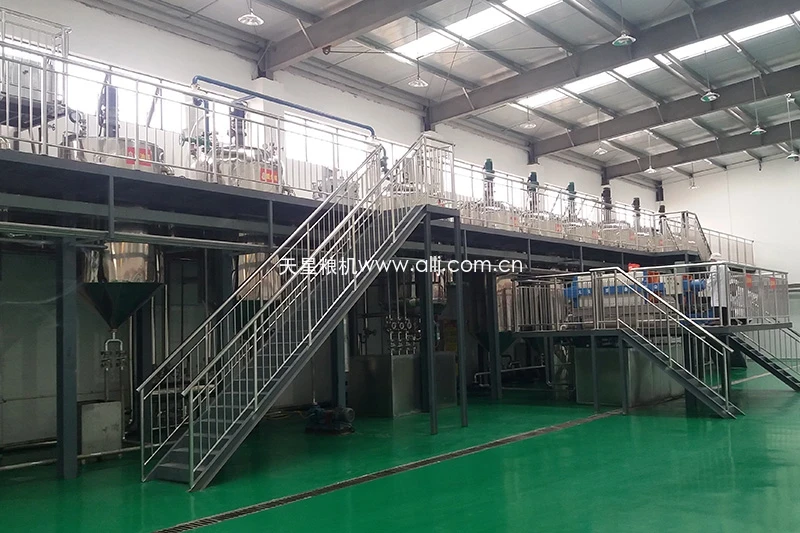
The refining system consists of equipment such as a refinery pot, decolorization and drying pot, deodorization pot, soapstock pot, crystallization tank, filter, thermal oil heater, vacuum system, and refrigeration unit.
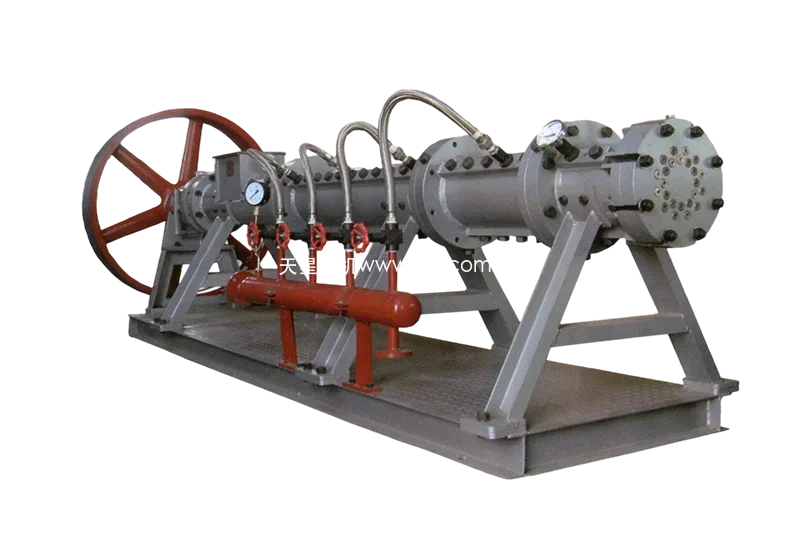
Expanding raw seeds or pre-pressed meal with a solvent extraction process is an ideal production technique, widely recognized and adopted by domestic and international oil producers due to its remarkable benefits—such as reducing equipment investment, boosting output, and lowering energy consumption.
At the heart of this oilseed expansion pretreatment process lies the oilseed extrusion-expander machine. Our company’s YJPZ series of oilseed extrusion-expanders is specifically designed for high-oil-content seeds. Inside the machine’s cylinder, the oilseeds undergo intense compression, heating, shearing, and kneading, thoroughly breaking down their cellular structures and exposing the trapped oils. As the material exits through the die, a sudden drop in pressure causes rapid evaporation of water vapor, resulting in moderately expanded particles.
This expansion process significantly enhances both solvent penetration into the seed cells and the subsequent release of oil from those cells, thereby improving the efficiency of the extraction and de-solventization stages. Additionally, moderate expansion increases the bulk density of the material compared to raw seeds, boosting the processing capacity of downstream extraction equipment.
Because the oilseeds spend only a brief amount of time inside the extrusion-expander, this method effectively preserves the quality of the raw materials. As a result, oilseed extrusion-expanders have become an indispensable tool for vegetable oil plants aiming to boost production, cut costs, and refine product quality.
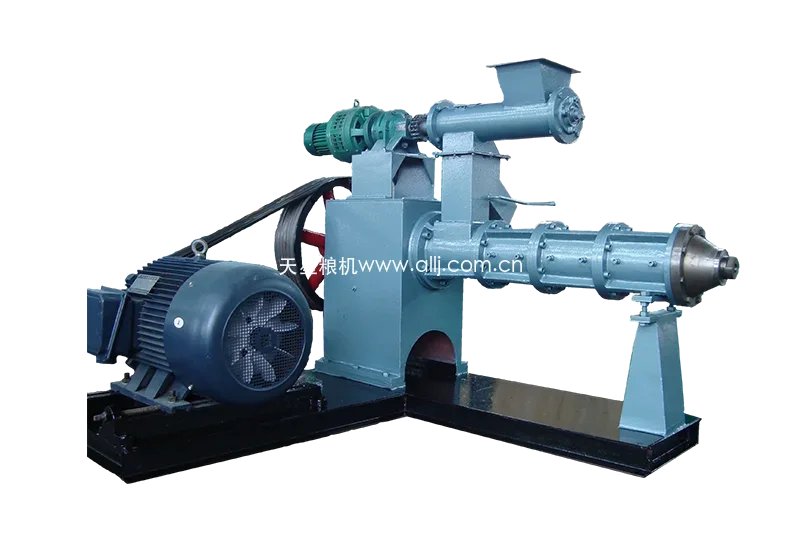
Tianxing Puffed Food Machinery Factory is a specialized manufacturer of various grain and oil puffed food machinery. The TXP-160 oilseed puffer, our latest successfully developed equipment, is ideal for use in oil mills, rice mills, soybean protein plants, and feed factories. This machine boasts high production capacity and low energy consumption, making it perfect for puffing materials such as rice bran, soybeans, corn, rice flour, and animal feed.
Notably, puffed rice bran can remain fresh for over two months, while the leaching unit’s processing capacity increases by 30–45%. Additionally, the residual oil content in the dry meal drops below 1%, and both the protein content and color of the bran-based meal outperform those produced through conventional pelletizing, drying, and leaching processes.
Puffed soybeans, meanwhile, undergo effective deodorization and urease inactivation, boosting the leaching unit’s productivity by 45–50%. The resulting dry meal contains less than 0.8% residual oil, with protein quality and color significantly surpassing those achieved via traditional drying and leaching methods.


